
Tiny Changes Add Up
DR SHAADY HARRISON | 3 minutes
Millions of people are watching as his goggles start filling with water.
By the first turn, his vision’s blurred. By the halfway point, he can’t see at all.
It’s the 2008 Olympic final and Michael Phelps is now swimming completely blind.
He doesn’t slow down – instead, he starts counting. Fifty-three seconds later he touches the wall and sets a world record. The camera pans to his coach as the arena goes wild.
Bob Bowman isn’t celebrating. He’s barely moved.
This win is no surprise – Bowman and Phelps have spent the last decade obsessively making hundreds of tiny improvements that build an advantage no amount of bad luck can touch. Sleep perfected to mattress firmness and room temperature, diet calculated to the calorie, two fewer strokes here, three extra breaths there.
Microscopic changes - nothing that would show up in a training session or on a leaderboard. But stacked together, repeated thousands of times, they turn Michael Phelps into the greatest Olympian of all time.
The Devil’s in the Details
We tend to overestimate the impact of big decisions and underestimate the impact of small ones. We assume our lives are shaped by turning points – career changes, moves, new relationships.
In reality, the groundwork for these changes is often laid in hundreds of unremarkable evenings and Tuesday afternoons.
Long before the dramatic body transformation came months of healthier meals and better choices. Years before the sudden career pivot came countless evenings of casual research and new conversations.
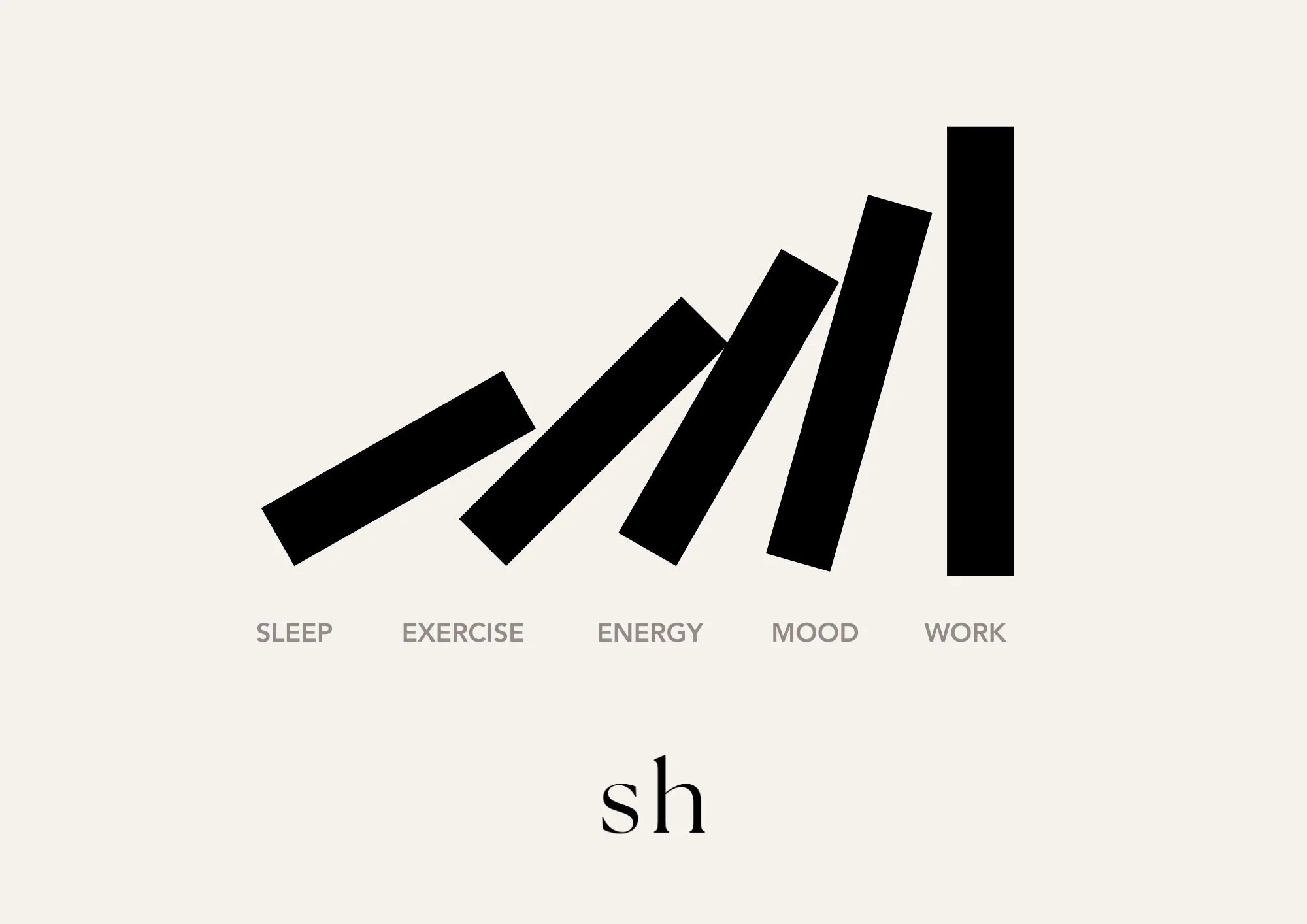
Individually, these little decisions don’t seem like much to shout about. But over time, they become small dominoes that gradually start knocking over bigger ones.
We Don’t Like Tiny Changes
Small changes are deeply offensive to the ego. They don’t make for impressive announcements, interesting conversations or triumphant declarations.
Nothing dramatic happens when we make a small positive choice.
There’s no visible change in the mirror, no sudden surge in energy, no measurable shift in mood. In other words, there’s no immediate reward. We’re wired to notice drama – we love big wins and satisfying breakthroughs.
There’s nothing exciting about a slightly earlier bedtime.
Small changes feel a bit pointless – until suddenly they don’t.
Why Tiny Changes Win
Our culture is obsessed with transformation. We celebrate dramatic before-and-after stories, and complete lifestyle overhauls. Big, sweeping changes are inspiring and impressive.
They also tend to be exhausting, unsustainable, and statistically unlikely to stick.
The human nervous system doesn’t like sudden changes. It prefers predictability, familiarity and stable rhythms. It’s why January gym memberships fade by February, why ambitious overhauls collapse under pressure, and why strict diets often end in binges.
Actions that require minimal willpower are the ones most likely to hold.
When a change is small enough, the brain barely registers it as a difference – reducing internal resistance and cognitive pushback. In other words, the new behaviour slips in under the radar – and sticks.
Where To Start
1) Lower The Bar
The goal isn’t to impress yourself, it’s to create a habit so easy you can’t say no. If it feels too small, you’ve probably got it right.
2) Habit Stack
The easiest way to build a new habit is to attach it to something you already do. Packing tomorrow’s lunch after loading the dishwasher. Laying out workout clothes after brushing your teeth. Your existing routine becomes the trigger for the new one.
3) Reduce Friction
Small positive choices stick best when the environment supports them. Keeping fruit visible on the counter, packing your gym bag the night before, charging your phone outside the bedroom. The less friction around the new behaviour, the less opportunity there is for your brain to argue.
Playing The Long Game
The habits that feel insignificant in the moment are often the ones that snowball over time to change our long-term outcomes.
In other words, our lives aren’t defined by big decisions. They’re defined by hundreds of thousands of tiny ones.
-
Habits as goal-directed automaticity. Wood W, Rünger D, 2016, Psychological Review, 123(3), 289–314.
Self-control as value-based choice. Berkman ET, Hutcherson CA, Livingston JL, Kahn LE, Inzlicht M, 2017, Current Directions in Psychological Science, 26(5), 422–428.
Making health habitual: The psychology of ‘habit-formation’ and general practice. Gardner B, Lally P, Wardle J, 2012, British Journal of General Practice, 62(605), 664–666.
Enjoy this article?
Absolutely no spam. Ever.

About The Author
Shaady Harrison is a British medical doctor, writer and private advisor specialising in the intersection of psychology, calm and performance.