
Why We Can’t Switch Off
DR SHAADY HARRISON | 3 minutes
It was an instant hit.
When London Zoo opened its polar bear enclosure in the early 1900s, it was considered a triumph. Newspapers praised it as a feat of modern design and visitors gathered daily to watch the animals up close.
At first, everything seemed fine.
Then the bears began to change.
They started pacing, tracing the same short loops over and over again. Some sat still for hours, withdrawn and unresponsive. Others wouldn’t eat, leaving meals completely untouched. A few developed repetitive head movements that were slow and unsettling to watch.
The zoo searched for explanations, but nothing made sense.
The answer wasn’t in the enclosure; it was written in their genetics. Polar bears have evolved to move through vast, empty landscapes. They’re calibrated for cold, darkness, silence, and long stretches of sensory calm.
Placed in the wrong setting, there was a mismatch – and their bodies felt it.
When an environment changes faster than biology can keep up with, things start to go wrong.
The human body has evolved to expect connection, movement, daylight, darkness, rhythm, and rest. The world around us now runs on speed, noise, stress and uninterrupted stimulation.
We may not be pacing, but we’re starting to feel the mismatch too.
A World Without an Off Switch
In the space of a few generations, we’ve stepped out of a world our biology understands and straight into one it doesn’t.
We spend less time outdoors, less time in nature, less time moving, less time resting, and less time deeply connecting with the people around us.
Against this backdrop, our nervous systems are asked to remain constantly alert, without any clear signals that it’s safe to rest. For many of us, this shift shows up as worry, overthinking, and difficulty switching off.
For others, it’s a background hum of feeling very slightly behind, very slightly rushed, very slightly on edge.
But all the time.
Always Slightly On
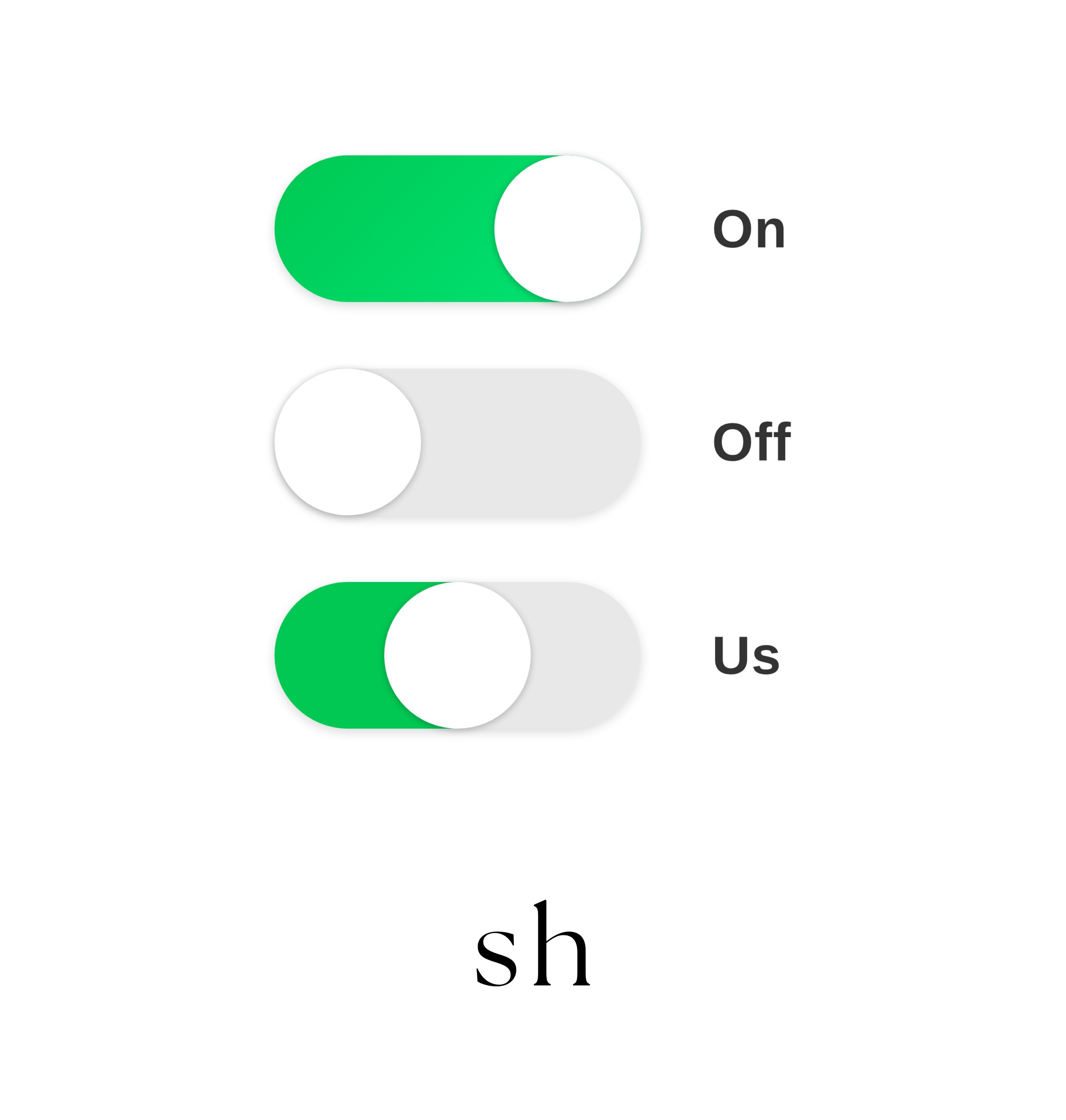
For most of human history, the nervous system behaved like a light switch.
On: danger, stress, fight or flight
Off: rest, safety, darkness, recovery
Today, that switch has become a dimmer. Never fully activated. But never fully off.
There’s a constant stream of unfinished tasks, emails, messages, notifications, and news alerts competing for our bandwidth.
The boundaries between the outside world and our homes have blurred – work no longer lives in one place, emails arrive at all hours, and news breaks at the breakfast table.
Our biology isn’t made for a world like this.
The autonomic nervous system is designed to oscillate – bursts of effort and stress followed by deep, restorative recovery.
Modern life has gradually worn this rhythm away. When stress never fully resolves, the body adapts and becomes vigilant by default. In other words, the nervous system rarely receives a reliable signal that it’s safe to fully switch off.
So it doesn’t.
Turning Down The Volume
When the outside world can intrude at any moment, the body stays half-braced, always slightly on, waiting diligently for the next interruption.
We were never meant to be constantly connected to the outside world.
Many of us are now living in a permanent state of standby mode. This isn’t a personal failure of discipline or resilience. Instead, it’s a predictable outcome of a world designed without an off switch.
But it’s not irreversible.
Our nervous systems are remarkably adaptable. The same biology that’s learned to stay permanently alert can also relearn how to stand down.
Small changes matter more than we think.
Switching off notifications. Walking without headphones. Ending evenings with a book instead of a scroll. Repeated often enough, these tiny decisions restore the edges the modern world has blurred.
As constant availability becomes the norm, the people who thrive in the next decade won’t be the most plugged-in, visible, or available. Instead, they’ll be the ones who built firm boundaries in a world constantly telling them not to.
-
Brain drain: The mere presence of one’s own smartphone reduces available cognitive capacity. Ward, A.F., Duke, K., Gneezy, A. & Bos, M.W. (2017). Journal of the Association for Consumer Research, 2(2), 140–154.
The brain on stress: Vulnerability and plasticity of the prefrontal cortex over the life course. McEwen, B.S. & Morrison, J.H. (2013). Neuron, 79(1), 16–29.
Stress-related noradrenergic activity prompts large-scale neural network reconfiguration. Hermans, E.J., van Marle, H.J.F., Ossewaarde, L. et al. (2011). Science, 334(6059), 1151–1153.
Enjoy this article?
Absolutely no spam. Ever.

About The Author
Shaady Harrison is a British medical doctor, writer and private advisor specialising in the intersection of psychology, calm and performance.