
Your Brain Is Older Than You Think
DR SHAADY HARRISON | 3 minutes
There were five of them.
In 1868, road workers in southern France were cutting into a limestone wall when the ground suddenly gave way.
The rock face broke open, revealing a hidden chamber where there should have been solid stone.
Inside lay five human skeletons.
Arranged deliberately and buried with care, they were surrounded by shell ornaments and ivory jewellery. As the earth was brushed away, the age of the remains became clear.
These people had died more than thirty thousand years ago.
Bone by bone, a team of archaeologists examined the scene. Their skeletons were different from ours in almost every way – thicker bones, shorter feet, broader shoulders, more powerful limbs.
But then they reached the skulls.
They were strangely… familiar. The same size. The same proportions. Even the same inner contours.
They stopped. How could this be possible?
These humans had lived tens of thousands of years ago. And yet the brains inside their skulls were almost exactly the same as ours.
Ancient Brains in a Modern World
From the outside, the human body has changed considerably over time. We’re taller than our ancestors, we have longer legs, our skeletons are lighter, even our faces have softened.
But underneath these visible upgrades, the brain remains largely the same organ it was tens of thousands of years ago.
This matters more than we realise.
Over thousands of generations, the nervous system learned what kind of world it was operating in, and calibrated itself accordingly. Gradually, this became the blueprint it needed to function at its best.
Our ancestors lived in close rhythm with the natural world around them. Light arrived in the morning and faded at night. Darkness signalled sleep. Social connection was direct, face-to-face and meaningful. Movement was built into daily life, and there were periods of genuine rest. Stimulation came in bursts, not as a constant background hum.
The nervous system learned what to expect from the world around it.
Then, very suddenly, that world disappeared.
Artificial light extended the day well beyond sunset. Chairs replaced walking. Screens brought infinite information into our pockets. Social connection became faster, thinner, and detached from physical presence.
Life moved on, but our brains didn’t get the memo.
Much of the strain many of us are feeling today stems from this mismatch. In other words, our biology is brilliantly tuned for a world that doesn’t exist anymore.
Following the Blueprint
If we take a wild animal and isolate it in a small, brightly lit enclosure, disrupt its sleep, and feed it unnatural food, something predictable happens. It doesn’t thrive. It becomes anxious, aggressive, and withdrawn.
No one calls this a mindset problem.
Humans need sleep, movement, rest, and face-to-face connection to function at their best.
These aren’t lifestyle preferences – they’re biological requirements.
Many of us can tolerate their absence for surprisingly long periods – running on the fumes of shortened sleep, limited movement, poor nourishment, and thin connection for years – sometimes decades.
But eventually the cracks begin to show.
When you strip away the surface differences, we’re remarkably similar to the humans who came before us.
Underneath the fancy technology and creature comforts sits a nervous system still waiting patiently for the same inputs.
While the world around us has changed quickly, all is not lost. There’s no need to abandon modern life or start foraging for food in the wilderness. Our brains respond surprisingly quickly when familiar conditions are reintroduced in small ways.
It’s no coincidence that we feel calmer in nature, think more clearly after a long walk with friends, or sleep more deeply after a day with natural light and movement.
These are all signals our ancient nervous system finally recognises.
We’re often told that thriving in the modern world means adapting faster, doing more, working harder, and staying switched on. But most of us are playing long-term games, not short ones.
Sustained excellence comes from alignment, not endurance.
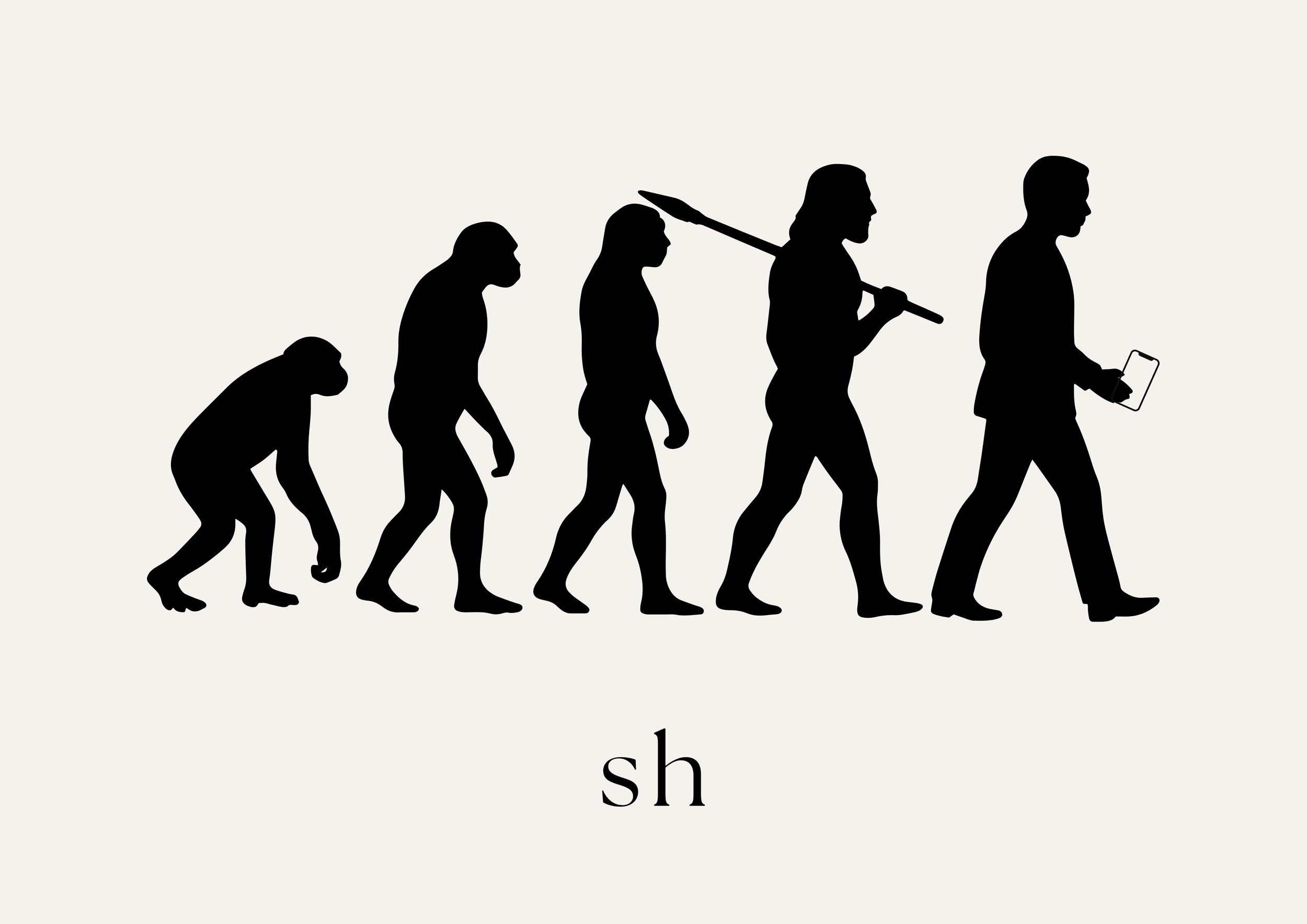
We’re navigating a world filled with AI, algorithms, and automation with brains from the Stone Age.
Our tools may have changed, but the organ using them hasn’t. Underneath the emails, apps, and calendars sits a brain still craving nature, footsteps and faces.
-
Evolutionary mismatch, chronic disease, and the human body
Lieberman, D.E., et al., 2023, Nature Reviews Genetics, 24(6), 353–369.Revisiting the stress concept: implications for affective disorders
McEwen, B.S., Akil, H., 2020, Journal of Neuroscience, 40(1), 12–21.Inflammation, stress, and human social behaviour
Raison, C.L., et al., 2021, Nature Reviews Immunology, 21(8), 471–486.
Enjoy this article?
Absolutely no spam. Ever.

About The Author
Shaady Harrison is a British medical doctor, writer and executive advisor specialising in the intersection of psychology, calm and performance.