
A Nasty Case of Silver Medal Syndrome
DR SHAADY HARRISON | 3 minutes
A few years after it finished, researchers sat down to watch footage from the Barcelona Olympics.
They weren’t interested in who’d run the fastest, jumped the highest or nailed the best triple somersault – they wanted to find out who was happiest about it.
So they muted the sound, hid the results, and showed clips from the medal ceremonies to a group of strangers, asking them to rate each face on a scale from agony to ecstasy.
The results came back in the wrong order.
Time and time again, the bronze medallists looked happier than the silver medallists.
Somewhere in Barcelona, a handful of people had produced the second-best performance on the planet, and it had thoroughly ruined their afternoon.
The Trouble With Better
We’re very good at losing things we never had.
The human brain doesn’t judge our outcomes in a vacuum; it stacks them up against our expectations, near misses and whatever happened to the person standing next to us.
This creates a painfully common emotional contradiction – an objectively great result in life can still leave us feeling suspiciously like we got the consolation prize.
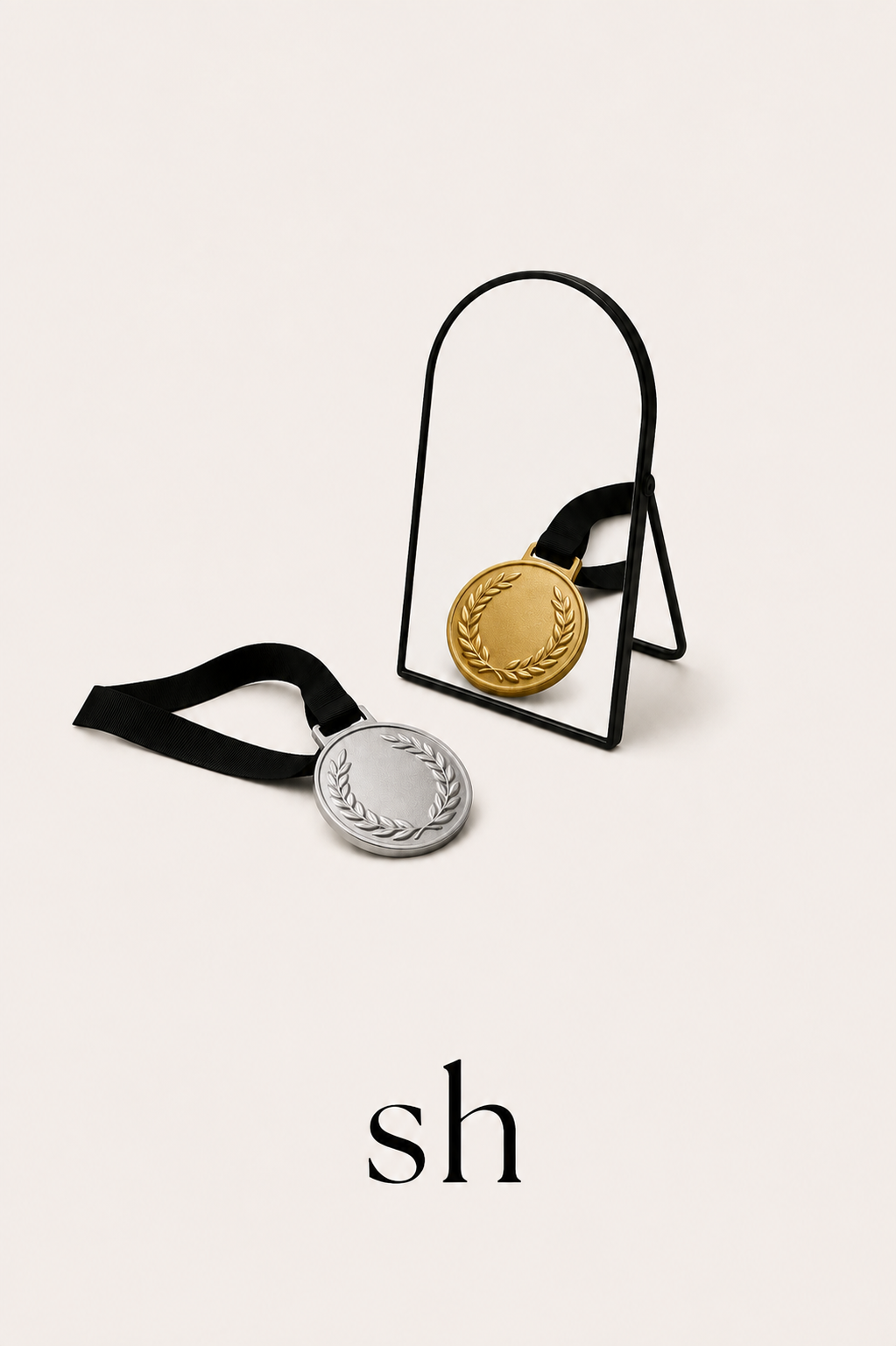
Bronze feels brilliant because it was almost nothing; silver stings because it was almost gold.
The brain takes near misses particularly personally because the alternative feels so close we can almost taste it. Failing an exam by a single mark hits different to failing one by thirty, in the same way missing a train by seconds just feels worse than arriving half an hour late.
But could have has a nasty little habit of turning into should have.
The imaginary gap between what happened and what could have happened can make what-ifs eerily convincing. And before we know it, an aesthetically pleasing ending the brain concocted out of nowhere somehow ends up on the list of things we lost out on.
Reality Has Competition
Every result in our lives comes with an imaginary version too.
This natural tendency to invent alternative endings is called counterfactual thinking, and it has an unfortunate habit of making reality feel worse than it is.
Yet while counterfactual thinking may look remarkably like emotional self-sabotage from a distance, the human mind isn’t quite as keen on punishment as it seems.
The same mental machinery that produces regret also produces learning.
When things don’t go to plan, the brain gets busy reconstructing the past and running different versions of it in a mental simulation. This cycle of rewinding, changing one detail and pressing play again helps it pinpoint where a different choice might have changed the ending.
But there’s a fine line between learning from the past and torturing ourselves about it.
Once the lesson has been learned – or worse, when there was no lesson there to begin with – the gap becomes somewhere to suffer rather than somewhere to learn.
Cognitive simulation is all well and good, but even the best tools need an off switch.
Mind The Gap
The brain’s enthusiasm to learn from the past can also trap it there.
Counterfactual thinking works best when it changes what we do next, without turning hypothetical lessons into an oversized stick to beat ourselves with.
The solution isn’t to stop imagining better endings, banish regret, or perform an aggressively cheery rebrand of every disappointment.
But our imagined lives tend to get a pretty generous amount of airbrushing. They’re beautifully polished, suspiciously free of complications, and never had to survive contact with the unavoidable messiness of reality.
There’ll always be another version of life in which the timing was better, the decision was wiser and the medal turned out to be gold. Well, that is until the brain gets round to rewriting that one too.
-
When less is more: Counterfactual thinking and satisfaction among Olympic medalists. Medvec, V. H., Madey, S. F., & Gilovich, T. (1995). Journal of Personality and Social Psychology, 69(4), 603–610.
The functional theory of counterfactual thinking. Epstude, K., & Roese, N. J. (2008). Personality and Social Psychology Review, 12(2), 168–192.
Counterfactual thinking. Roese, N. J. (1997). Psychological Bulletin, 121(1), 133–148.
Enjoy this article?
Absolutely no spam. Ever.

About The Author
Shaady Harrison is a British medical doctor, writer and executive advisor specialising in the intersection of psychology, calm and performance.