
Why We Got Hooked
DR SHAADY HARRISON | 3 minutes
His eyes are glued to the screen, watching the numbers move.
It’s late, but he’s not tired. As his friends sleep around him, he refreshes – something strange is happening.
The same names keep coming back, over and over again.
People aren’t just arriving, they’re staying.
And after leaving, they’re coming back. They’re not just using the site, they’re checking it, repeatedly, multiple times a day.
In a small dim-lit dorm room at Harvard University, 19-year-old Mark Zuckerberg has just inadvertently changed the course of human history.
Welcome To the Attention Economy
We now live in a world built on capturing and reselling human attention.
Whether it’s binge-watching, doomscrolling or compulsively checking an app, there’s a reason we so easily fall into damaging patterns that we know don’t serve us.
With our debit cards remaining safely untouched while we scroll on our smartphones, it’s difficult for our brains to recognise this process as an exchange. When we buy something, there’s an immediate and tangible consequence in our bank accounts.
The same can’t be said when we’re lost in our screens.
This Wasn’t an Accident
Tech companies now invest billions of dollars in figuring out how to keep our eyes hooked on our smartphones. From disturbingly intelligent algorithms to eye-tracking technology, the aim of the game is simple.
Capture your attention and hold it as long as possible.
Fear of missing out, colour psychology, dopamine manipulation – every trick in the book is used to keep hold of your attention.
And it works.
It’s almost impossible to stop looking.
News platforms, Instagram, Facebook, LinkedIn, X, Tik Tok, YouTube – the content varies wildly, but the strategy remains the same.
Increase your screen time then package it up and sell it on to the highest bidder.
The Invisible Trade
Screens now shape every part of our lives. At their best they’ve given us extraordinary access to ideas, connection and possibility.
At their worst, they’ve given us a whole load of trash too.
In the thousands of hours spent reading the news, watching videos, or scrolling social media, it’s hard to believe nothing important has slipped through the cracks.
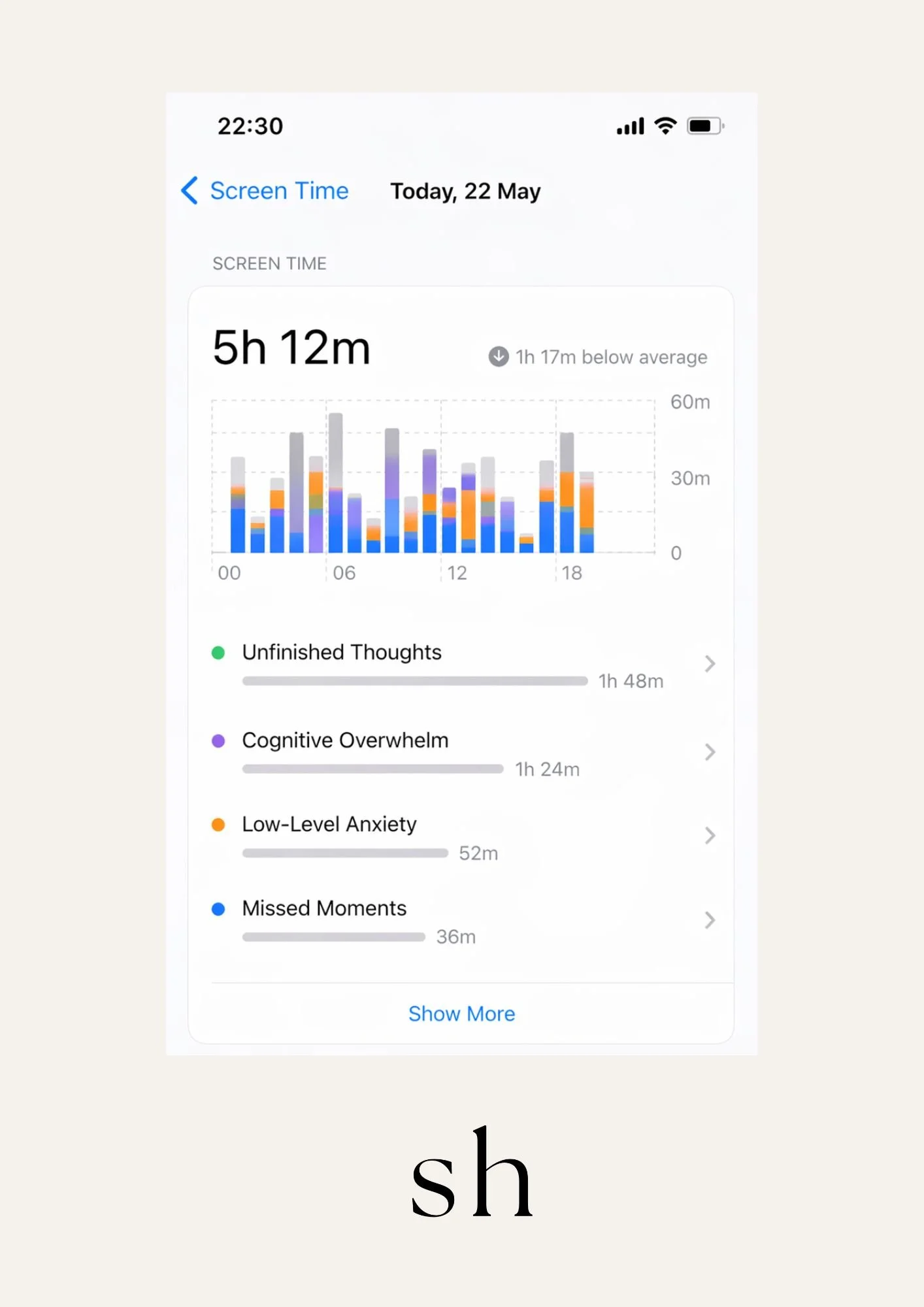
Our best ideas, deepest relationships and most meaningful work all live on the other side of distraction.
For the first time in history, we’re living in a world where our attention is being traded at scale.
Choose where it lands, or someone else will choose for you.
-
The attentional cost of receiving a cell phone notification.
Stothart, C., Mitchum, A., & Yehnert, C., 2015, Journal of Experimental Psychology: Human Perception and Performance, 41(4), 893–897.
A wandering mind is an unhappy mind. Killingsworth, M. A., & Gilbert, D. T., 2010, Science, 330(6006), 932.
Online social networks and addiction – A review of the psychological literature. Kuss, D. J., & Griffiths, M. D., 2011, International Journal of Environmental Research and Public Health, 8(9), 3528–3552.
Enjoy this article?
Absolutely no spam. Ever.

About The Author
Shaady Harrison is a British medical doctor, writer and private advisor specialising in the intersection of psychology, calm and performance.