
Stop Waking Up Like This
DR SHAADY HARRISON | 2 minutes
They named it the startle reflex.
An automatic survival response triggered by sudden noise or movement, it’s the body’s built-in emergency alarm.
Eyes wide open, muscles tense, heart rate spikes – it’s one of the fastest defensive reflexes in the human body. Designed to mobilise us in sudden danger, it’s the reason our ancestors could respond immediately when a predator appeared from the darkness.
For tens of millions of years, this reflex meant danger.
Now it’s how we start our mornings.
The Original Design
Waking up is supposed to happen gradually.
For almost all of human history, it went something like this. Light arrived slowly, shifting the sky from black to blue to gold. Temperature rose by a degree or two. Birds started singing – not all at once, but in overlapping waves that built across the hour before sunrise.
The human body was gradually invited to consciousness, not violently dragged into it.
The transition between sleep and wakefulness is a delicate neurological handover. At some point we decided it would be a great idea to aggressively speed it up.
When the brain is abruptly jolted from deep sleep, we tend to enter a state known as sleep inertia – a period of grogginess, slowed thinking and impaired decision-making that can last anywhere from a few minutes to over an hour.
But the first signal the brain receives really matters – how we wake up affects baseline stress levels for hours afterwards. A calm wake-up allows the nervous system to settle into the day gradually – a sudden one tells the brain something’s wrong.
The iPhone Problem
Waking up is supposed to be a biological process. Somewhere along the way, it’s become a technological one.
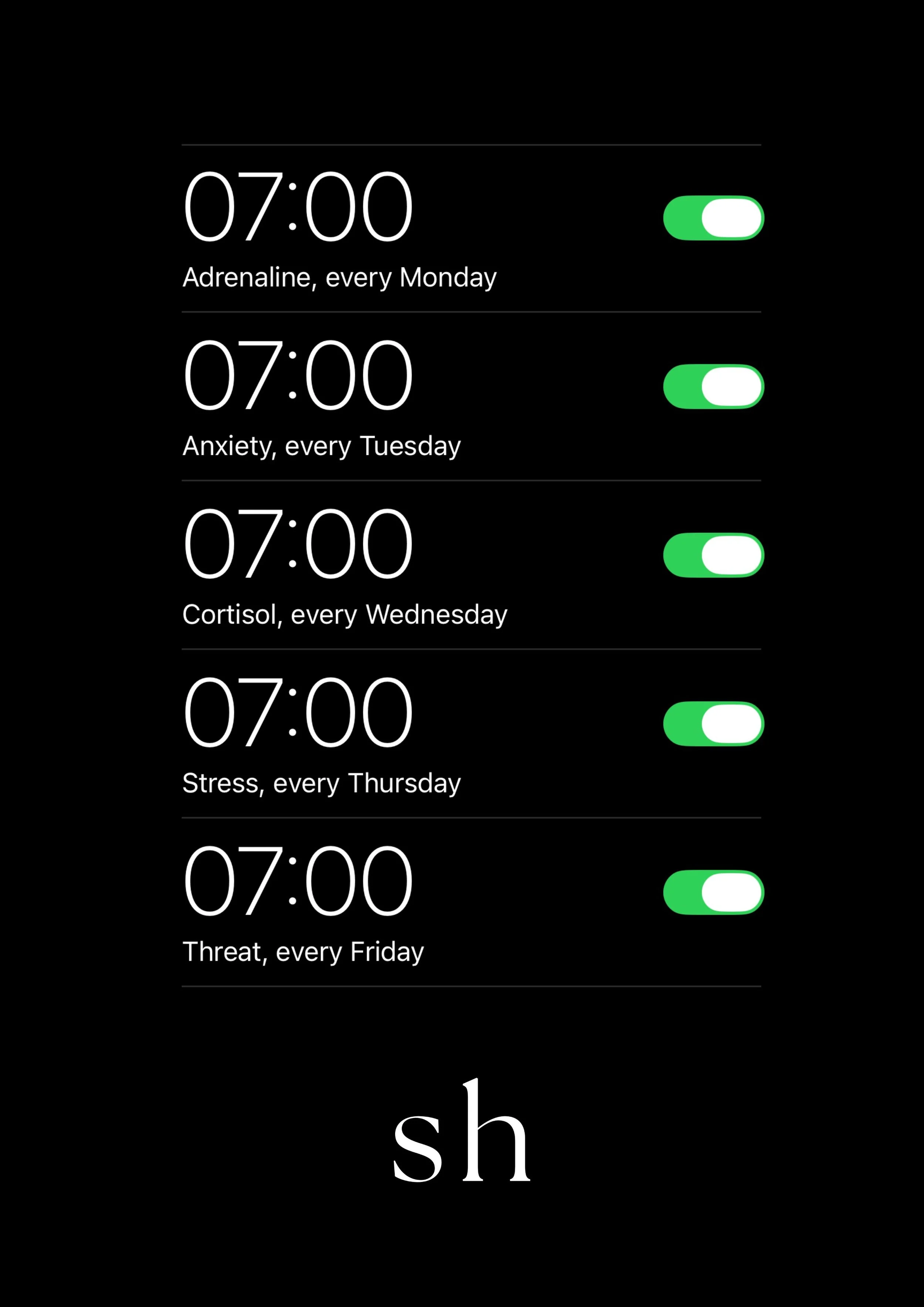
The iPhone alarm is effectively a miniature emergency siren, and it activates the fight-or-flight branch of our nervous system before the day has even begun.
We should be waking up to light or gentle noise, not the digital equivalent of a fire alarm.
A gradual signal allows the brain to wake in its own time – a sudden one drags it there. This isn’t exactly the ideal way to start the day.
Wake Up Better
If you’re going to wake up to sound, at least make it a nice one.
Better yet, wake up with light instead.
A sunrise alarm clock, a gradually brightening room, or just allowing natural morning light into your bedroom trigger the same biological cascade that’s been waking humans up for thousands of years.
Exposing the retina to light helps the body wake on its own terms, in its own time, arriving gradually at consciousness rather than being hurled into it.
The difference feels small, but our nervous systems notice.
A calm start doesn’t guarantee a calm day, but a violent one certainly isn’t going to do us any favours.
-
The cortisol awakening response: more than a measure of HPA axis function. Clow, A., Hucklebridge, F., Stalder, T., Evans, P., & Thorn, L. (2010). Neuroscience & Biobehavioral Reviews, 35(1), 97-103.
Light and the human circadian clock. Roenneberg, T., Kantermann, T., Juda, M., Vetter, C., & Allebrandt, K. V. (2013). Circadian clocks, 311-331.
Effects of sleep inertia on decision‐making performance. Bruck, D., & Pisani, D. L. (1999). The Journal of sleep research, 8(2), 95-103.
Enjoy this article?
Absolutely no spam. Ever.

About The Author
Shaady Harrison is a British medical doctor, writer and private advisor specialising in the intersection of psychology, calm and performance.