
Behind Closed Doors
DR SHAADY HARRISON | 3 minutes
The man in the passenger seat looks like he’s having a rough few weeks.
Feeling far from his best, he watches from the window of the pickup truck as it crawls through the traffic in the city.
Eventually, he arrives at work and makes his way inside. For the next few hours, he focuses on the task at hand and gets the job done, until it’s finally time to head back out to the car park.
Looking suspiciously out of place in a studio lot filled with row after row of polished cars, he walks back towards the pickup truck.
Matthew Perry has just finished shooting one of the biggest scenes in television history.
As the cast and crew celebrate the successful wrap of Monica and Chandler’s wedding, he climbs back into the waiting truck. He’s not going home – he’s heading straight back to the rehab centre to carry on treating a disease that’s slowly destroying his life.
More Than Meets The Eye
Most people don’t talk openly about the difficult parts of their lives. There are obvious and understandable reasons for this – no one wants to feel like a failure.
We present the parts of our lives that feel safe to share and tuck the rest neatly away under the carpet.
This creates an unusual problem.
We dramatically underestimate the struggles of people around us.
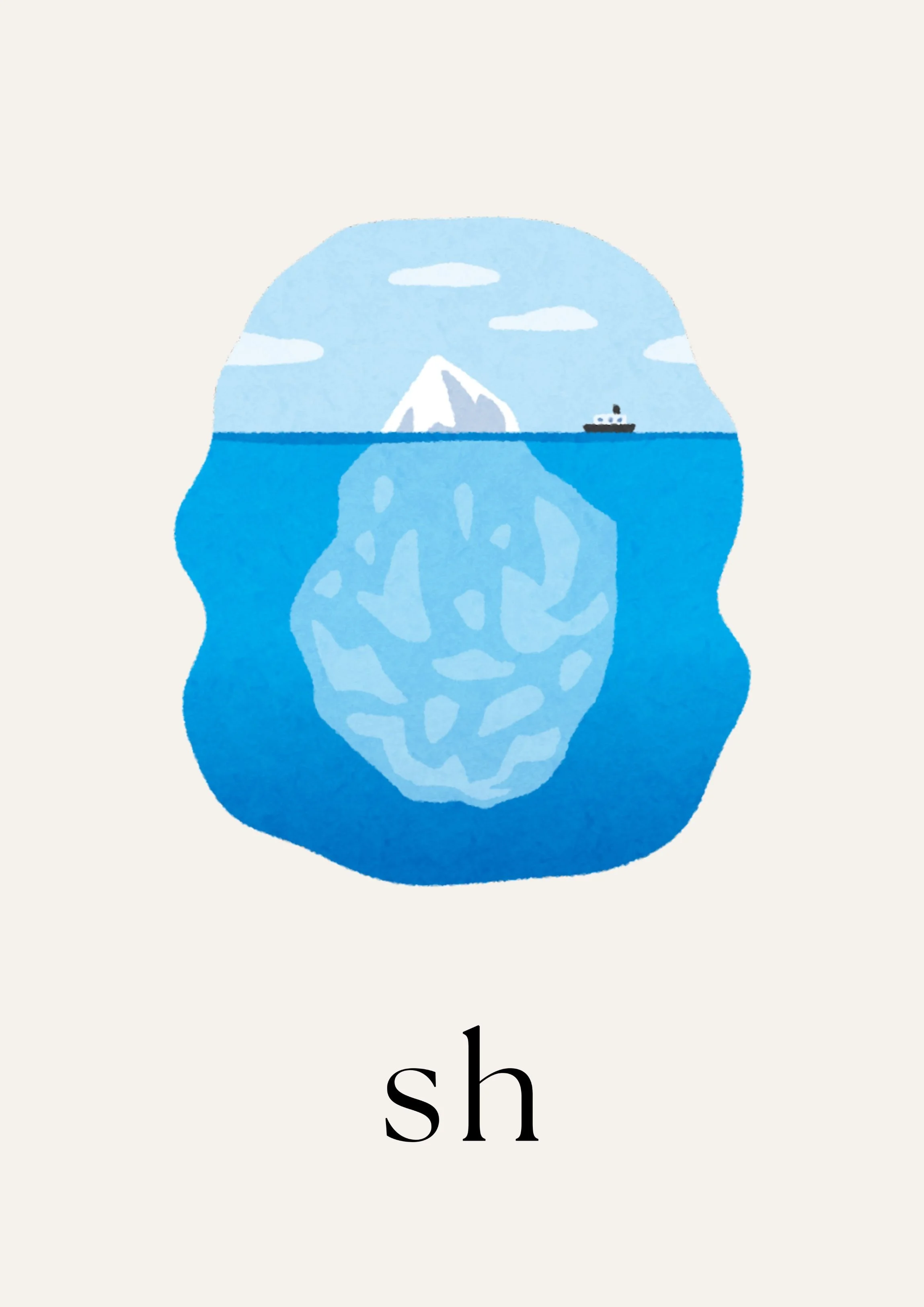
We judge the full unedited picture of our reality against the heavily filtered version of everyone else’s. In other words, we’re comparing our messy and complicated lives with a carefully curated highlights reel.
The Neuroscience of Comparison
We spend an extraordinary amount of time comparing ourselves to other people. For most of human history, this was genuinely useful – watching other people provided us with accurate, real-time data about how we were doing.
Until very recently, this data was grounded in reality – we judged ourselves against the small number of people whose daily lives were visibly playing out in front of our eyes.
The data we’re using has gradually turned into nonsense.
The same neural circuitry that once scanned our small communities for real information is now trying to process an endless feed of curated highlights from total strangers.
This isn’t comparison – it’s psychological self-harm with good lighting.
Social media didn’t invent social comparison. But it handed us an extraordinarily efficient tool for doing it badly, compulsively, and at industrial scale. At best, this is a colossal waste of time.
At worst, it’s doing real psychological damage.
When the brain thinks other people are doing better than us, it doesn’t respond with calm indifference – it responds like something’s wrong. These distorted comparisons trigger the same threat detection circuitry designed to respond to physical danger.
This isn’t exactly a helpful life hack.
Instead of motivating us, this subtle threat signal can push the nervous system into a defensive state – pulling the brain away from big thinking and towards worry, self-doubt, and protection instead.
The Meta Layer
When real problems seem rare, our own difficulties begin to feel unusual. Normal human struggle starts to feel like a personal failing.
In other words, we start to believe the problem is us.
This creates a particularly unhelpful form of suffering called meta-suffering, where we’re no longer just navigating the problem itself, we’re also dealing with the belief that we shouldn’t actually be struggling with it in the first place.
This layer does far more damage than the original issue.
The belief that everyone else has mastered life is a surprisingly heavy psychological burden to carry.
It’s also almost never true.
Behind closed doors, most lives are far more complicated than they look from the outside.
Take reality with a pinch of salt – things aren’t always what they seem.
-
The neural basis of social pain: evidence for shared representations with physical pain. Eisenberger, N.I., Lieberman, M.D., Williams, K.D., 2003, Science, 302(5643), 290–292.
Facebook use predicts declines in subjective well-being in young adults. Kross, E., Verduyn, P., Demiralp, E., Park, J., Lee, D., Lin, N., Shablack, H., Jonides, J., Ybarra, O., 2013, PLOS ONE, 8(8), e69841.
A neural measure of the intensity of social comparison. Fliessbach, K., Weber, B., Trautner, P., Dohmen, T., Sunde, U., Elger, C.E., Falk, A., 2007, Science, 318(5854), 1305–1308.
Enjoy this article?
Absolutely no spam. Ever.

About The Author
Shaady Harrison is a British medical doctor, writer and private advisor specialising in the intersection of psychology, calm and performance.