
Why I Deleted Instagram
DR SHAADY HARRISON | 3 minutes
Everyone watches her.
She’s up before sunrise and back before breakfast, returning to two happy kids who slept perfectly through the night. Her morning routine is the stuff of legend – she’s fed the others and got half a day of work done before anyone else has even put their shoes on.
It’s roughly thirty thousand years ago, and this girl is absolutely smashing the Stone Age.
And yet nobody in her tribe mistakes this snapshot for the whole story. They know she can’t walk without pain, hasn’t slept properly for months – and that those children aren’t even hers.
Not one person envies her – they’ve seen enough to know better.
The Original Algorithm
We’re supposed to watch other people.
Social comparison is ancient and useful; looking sideways helps the brain build a picture of what normal’s supposed to look like. In a world of close-knit communities and hunter-gatherer lifestyles this had real practical value – other people finding more berries, running faster or building better shelters was information worth paying close attention to.
But it worked because it wasn’t possible to edit the evidence.
Comparison used to come with a pretty hefty lump of context attached – the good bits were visible, but so were the costs, compromises and failures that inevitably came with them.
Nobody got the promotion without half the tribe also knowing about the rather unfortunate flare in their haemorrhoids.
Reality came as a package deal, gloriously whole and impossible to filter.
That is, until we built a tool which stripped it for parts.
Bad Data
Social media used to be fun – it was a jumble of pointless Facebook statuses, badly tagged photographs and people proudly showing us what they’d eaten for lunch.
Somewhere along the way the feed stopped showing us our friends and started serving an endless procession of happy strangers instead.
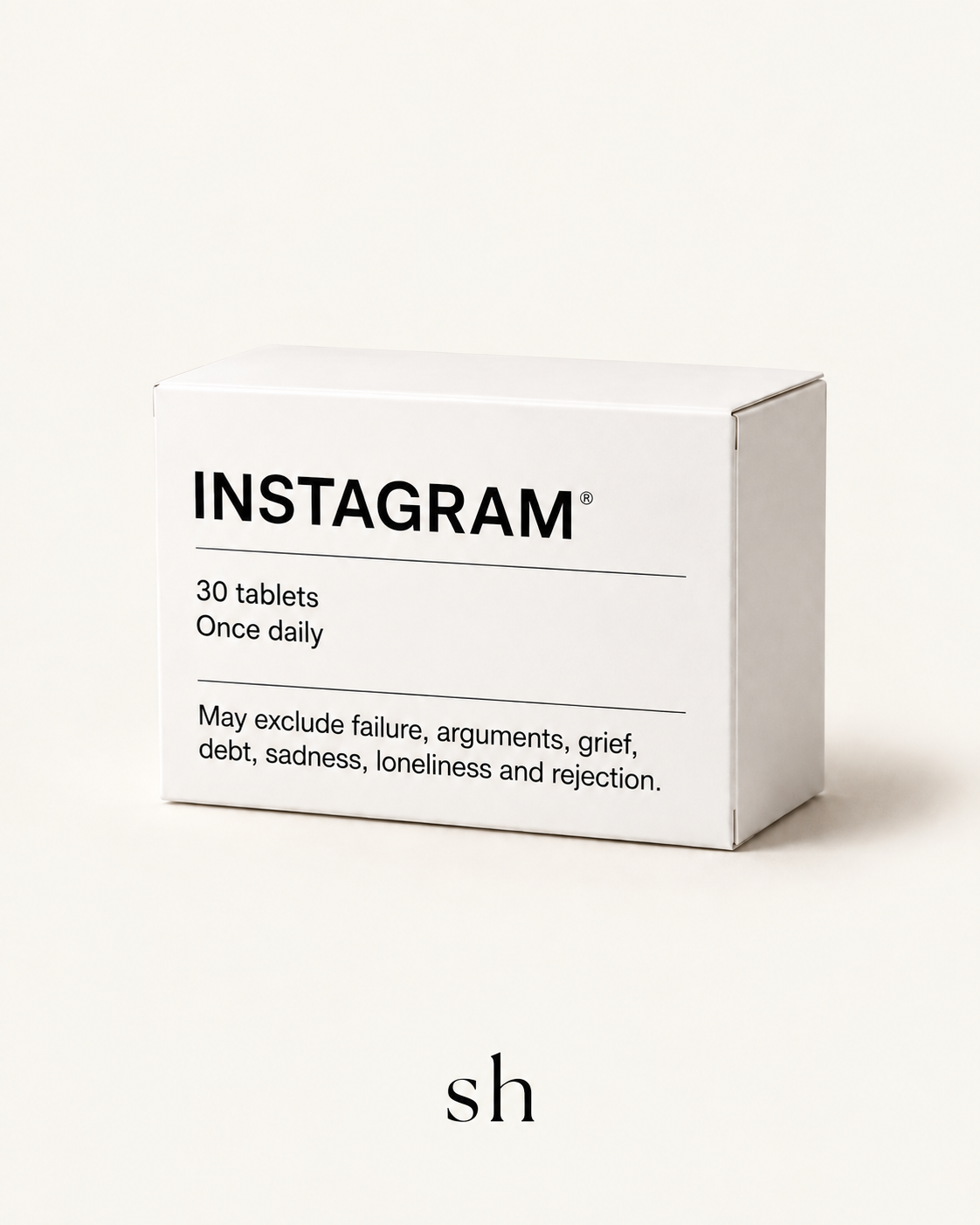
Instagram takes the top 1% of people’s lives and presents it to the mind as average. This shifts the goalposts for what normal looks like, gradually recalibrating the brain’s internal model of where we ought to be by now.
My highlights reel gives you a carefully curated snapshot of my life – yours follows suit and returns the favour.
Between us, we trim away the ugly bits and make the messy details disappear.
Multiply that pattern across millions of accounts and the airbrushed fragments start to look suspiciously like reality. All this editing comes at a cost; science has plenty to say about how this collective illusion impacts the brain.
But more importantly, what does it do to the soul?
Great Expectations
Philosophers have been studying happiness for millennia.
Wealth, status and success seemed the obvious places to start, but as science sharpened its tools every trail kept leading back to strong relationships, good health, autonomy and a sense of purpose.
And yet underneath these truths was another force at work.
Happiness is shaped by expectations, not reality.
Much of what feels like satisfaction is simply the gap between what life is and what we thought it would be. So where does that leave a brain that’s scrolled through dozens of highlights reels before breakfast?
According to Instagram, nobody else ever spends their Wednesday afternoon ungracefully spiralling because they’ve completely screwed something up.
Across years and decades, these tiny omissions of truth warp expectations until reality starts losing the fight by comparison. Nothing much happens after looking at one thumbnail – there’s only so much a single beautifully edited stranger can change.
The trouble starts to brew somewhere around the thousandth.
-
Evolutionary mismatch, chronic disease, and the human body
Lieberman, D.E., et al., 2023, Nature Reviews Genetics, 24(6), 353–369.Revisiting the stress concept: implications for affective disorders
McEwen, B.S., Akil, H., 2020, Journal of Neuroscience, 40(1), 12–21.Inflammation, stress, and human social behaviour
Raison, C.L., et al., 2021, Nature Reviews Immunology, 21(8), 471–486.
Enjoy this article?
Absolutely no spam. Ever.

About The Author
Shaady Harrison is a British medical doctor, writer and executive advisor specialising in psychology, calm and high performance.