
It’s All In Your Head
DR SHAADY HARRISON | 3 minutes
He arrived in our department wearing a tartan dressing gown and matching slippers to boot.
As his daughter rattled through one worrying example after another, he sat looking bemused on the hospital chair, making clear he had absolutely no idea what all the fuss was about.
At first it hadn’t been obvious – over the last few days he’d been forgetting things, losing the thread of a conversation, and wandering into a room trying to figure out why he’d made his way there in the first place.
But things took a turn for the worse when a police officer had found him at three o’clock in the morning looking for a bus stop.
By then, the picture was beginning to look uncomfortably familiar. That is, until six days of antibiotics later and he was back at home doing the crossword puzzle.
The Wrong Department
When somebody’s thinking or behaviour shifts, the obvious place to look is their mind.
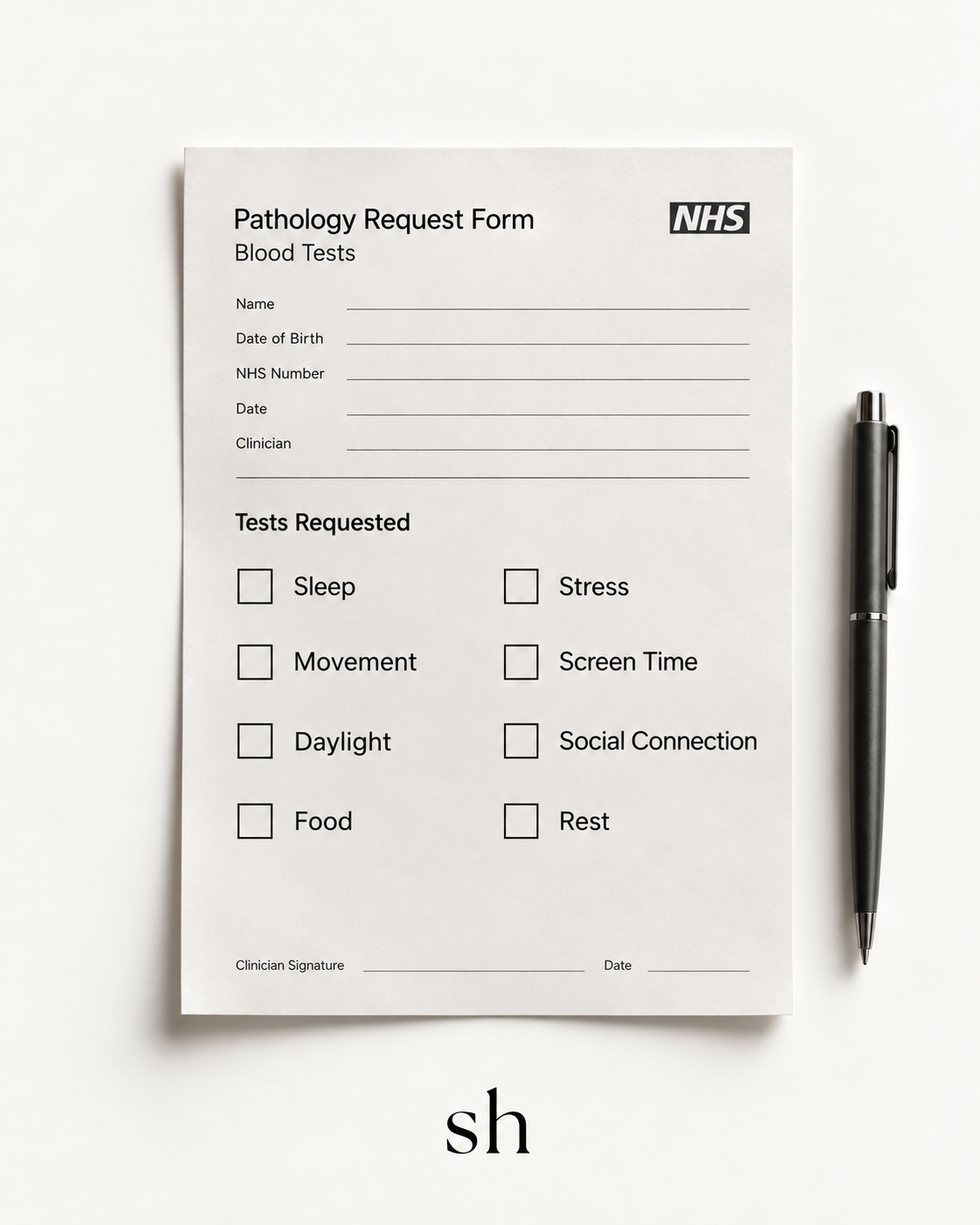
And yet when an older person becomes confused overnight, doctors don't reach for a psychology textbook – they start filling out a blood form.
The same logic applies to a whole host of changes – steroids can trigger psychosis, liver failure can change personality, and a sudden drop in blood glucose can make an otherwise completely rational person aggressive and hard to manage.
In the Emergency Department, it’s no big secret that the body can influence the mind.
So in the face of less dramatic changes, why does that logic disappear?
Fine Print
Mental health is messy – there’s a gaping chasm of human experience between feeling on top of the world and being admitted to a psychiatric unit.
Most of life happens somewhere in the middle.
As the demands of the modern world have crept upwards, we’ve become remarkably generous about what qualifies as “fine” – chronically stressed but functioning, deeply unhappy but smiling, completely exhausted but still getting through the day.
Collectively, these various shades of “fine” account for a whole lot of human suffering.
And yet somewhere along the way, the body got dropped from the conversation.
Human biology was built for a world that looked totally different to this one. Days were slower, movement was a given, food wasn’t ultra-processed, and stress tended to arrive in bursts instead of as a constant hum of background noise.
In less than a century, modern life has steamrolled its way through almost every part of that equation.
Funnily enough, our minds haven’t exactly flourished with the updates.
Blurred Lines
The body isn’t always the answer – clinical depression isn’t going to be fixed anytime soon with more sleep or a new pair of trainers.
But the brain doesn’t sit above the body – it literally lives inside it.
The line between physical and mental health becomes inconveniently blurry once there’s a real human attached; everything from the hormones in our blood to the bacteria in our gut can shape how it feels to be inside our minds.
The modern world spent the last few decades making movement optional, screens normal, food unrecognisable and stress inescapable, then told everyone to practise better self-care.
That’s a serious amount of work for a scented candle.
When a mind changes overnight, medicine searches the body. When it changes over a year or decade, we tend to search the mind.
Mental health can’t be reduced to biology, but when it comes to all those shades of fine, the body may have a little more to say than we’ve been giving it credit for.
-
Mind-altering microorganisms: The impact of the gut microbiota on brain and behaviour. Cryan, J. F., & Dinan, T. G. (2012). Nature Reviews Neuroscience, 13(10), 701–712.
Stone agers in the fast lane: Chronic degenerative diseases in evolutionary perspective. Eaton, S. B., Konner, M., & Shostak, M. (1988). The American Journal of Medicine, 84(4), 739–749.
Why zebras don't get ulcers (3rd ed.). Sapolsky, R. M. (2004). Henry Holt.
Enjoy this article?
Absolutely no spam. Ever.

About The Author
Shaady Harrison is a British medical doctor, writer and executive advisor specialising in psychology, calm and high performance.