
Choose Your Friends Carefully
DR SHAADY HARRISON | 3 minutes
It’s spreading like wildfire.
Jumping between friends, then friends of friends, it moves through an entire town before rippling outwards, until it finally loses momentum.
By the time researchers catch up, it looks like an outbreak.
Except it’s not an infection.
In one of the largest social network studies ever carried out, scientists followed thousands of people over decades and uncovered something unexpected.
Behaviour spreads through people like a virus.
From weight gain to smoking, drinking to divorce, it turns out our choices aren’t quite as personal as they seem.
We’re Copycats
Human beings are designed to copy each other. Our ancestors evolved in small, tight groups and learned quickly that being out of step came at a cost.
Matching the behaviour of the tribe increased your chances of staying in it – and staying in meant survival.
For this reason, the brain developed a shortcut. It didn’t matter what the question was – whatever others were doing was usually the right answer. Fast forward to today, and our safety no longer depends on the circle of people around us.
Unfortunately, that doesn’t mean we’ve stopped copying them.
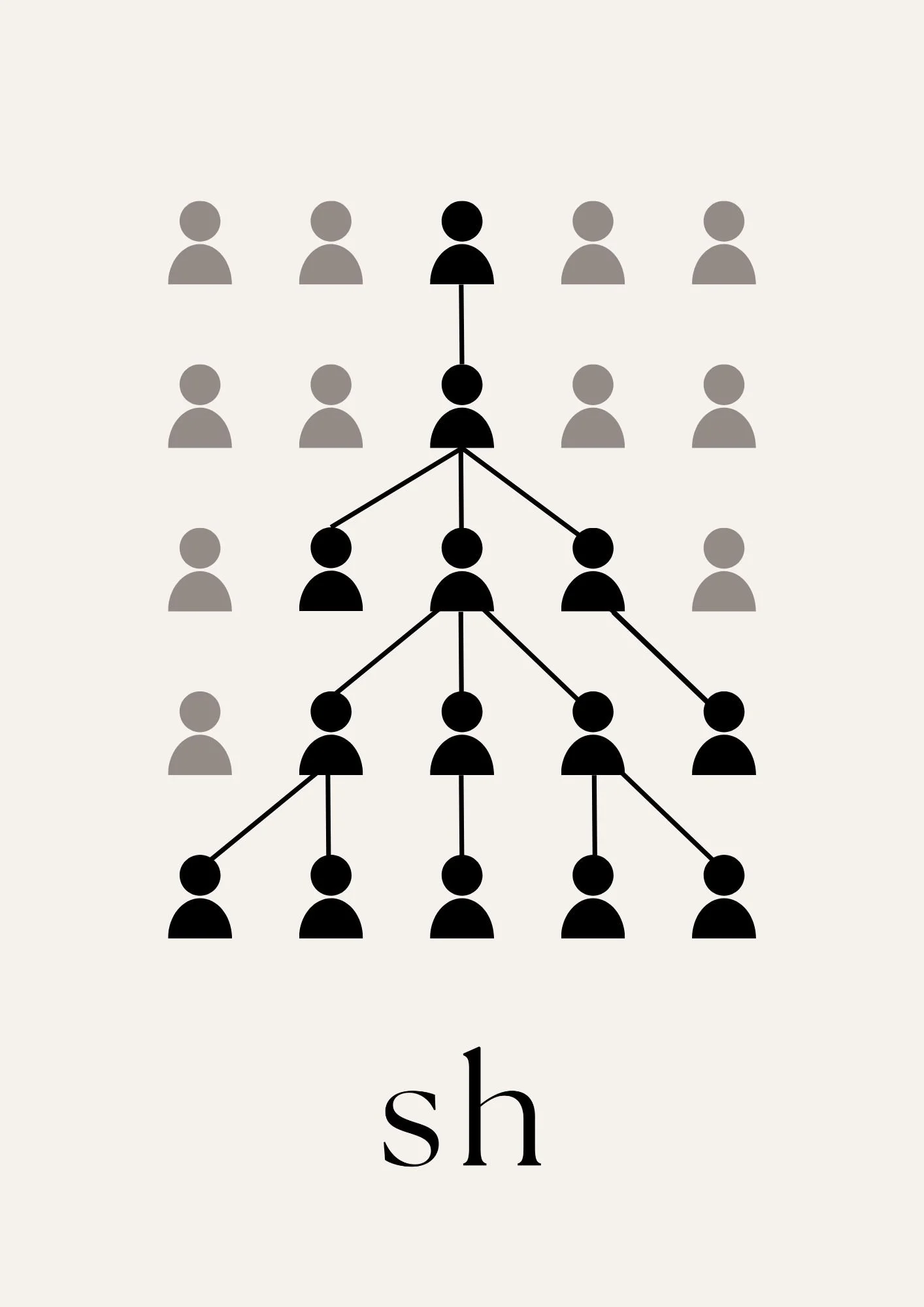
The Mirror Effect
We don’t just observe other people – we absorb them.
Watching a behaviour activates similar brain circuits as actually performing it. This doesn’t mean we go through life mindlessly copying everything we see.
But the gap between seeing and doing isn’t quite as wide as it seems.
We unconsciously mirror the speech rhythms, behaviours and emotional weather of those we spend the most time with.
If you’re around anxious people, your nervous system doesn’t just observe their tension – it partially recreates it inside you.
This explains why some environments bring out the best in us, while others gradually do the complete opposite.
Choose Wisely
The people around you aren’t just company – they’re influencing everything from your sleep quality to your pay cheque.
Most of us don’t consciously choose our circles. Friendships form through proximity, and over time we absorb the norms of wherever we’ve landed.
But having old friends doesn’t mean we can’t make new ones.
Bad choices are contagious.
As it happens, good ones are too.
-
The spread of obesity in a large social network over 32 years. Christakis NA, Fowler JH. 2007. New England Journal of Medicine, 357(4), 370–379.
The collective dynamics of smoking in a large social network. Christakis NA, Fowler JH. 2008. New England Journal of Medicine, 358(21), 2249–2258.
Experimental evidence of massive-scale emotional contagion through social networks. Kramer ADI, Guillory JE, Hancock JT. 2014. Proceedings of the National Academy of Sciences, 111(24), 8788–8790.
Enjoy this article?
Absolutely no spam. Ever.

About The Author
Shaady Harrison is a British medical doctor, writer and private advisor specialising in the intersection of psychology, calm and performance.