
The Devil Wears Pyjamas
DR SHAADY HARRISON | 3 minutes
Some of them are so tired they’re struggling to function.
It’s the height of the tech boom in China, and a culture of extreme productivity has pushed workers into a schedule infamously known as 996.
Nine in the morning until nine at night – six days a week.
At first glance it just looks like a one-way road to burnout, but the strangest part of the story isn’t what’s happening during these twelve-hour days.
It’s what’s happening after them.
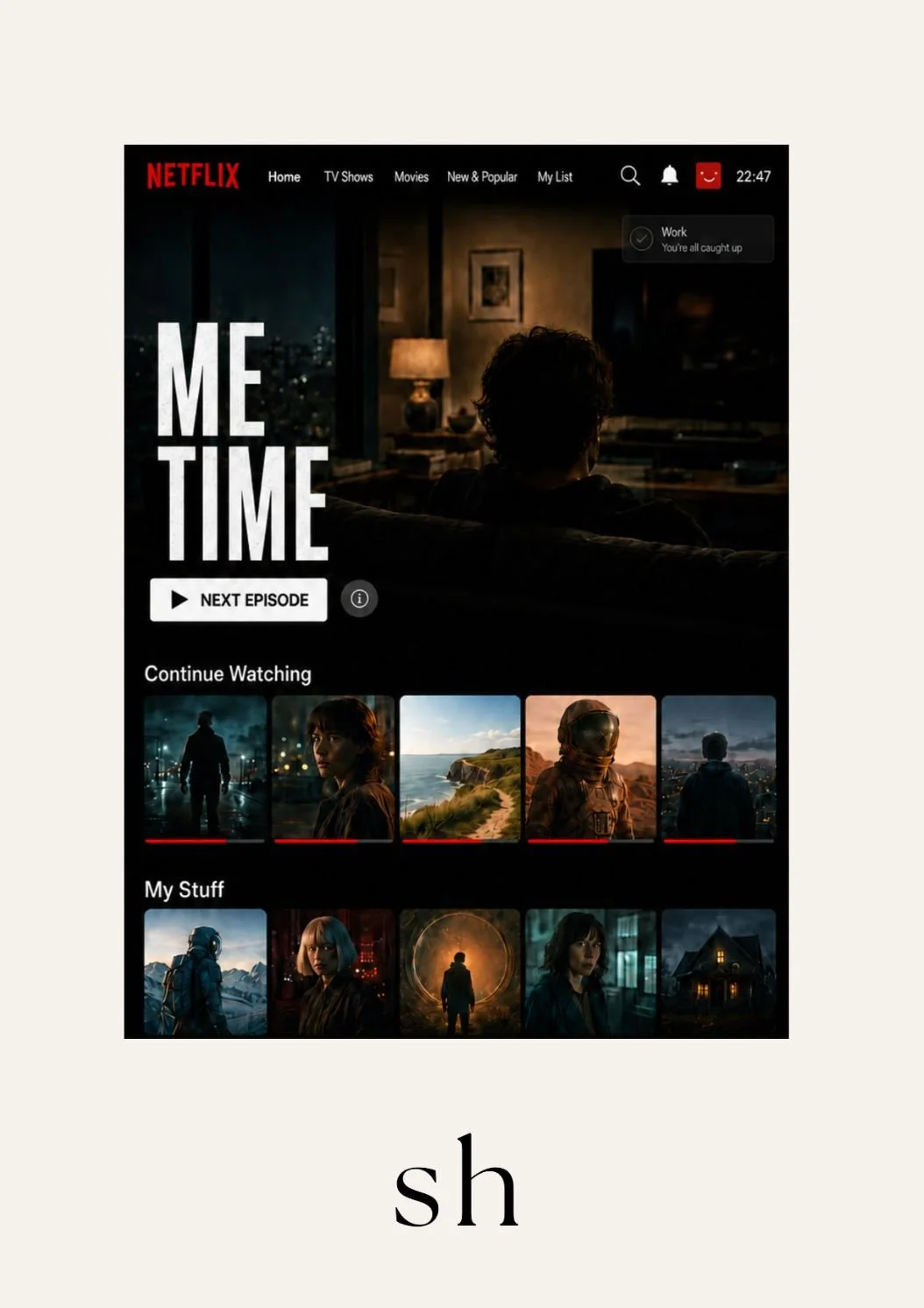
Thousands of workers are coming home barely able to keep their eyes open and then staying awake deep into the night – scrolling, watching TV, and gaming until the morning.
Their bodies are begging for sleep.
But their brains fight to stay awake anyway.
A Bad Trade
Revenge bedtime procrastination is the deliberate choice to sacrifice sleep for personal time – even when we know we’ll regret it in the morning.
On paper it makes no sense; staying up late leads to a frustrating cycle of daytime exhaustion followed by more late-night screen time.
So why do we keep doing it?
A cultural glorification of busyness tends to leave the evening as the only unguarded territory. After a day spent being useful, available, and mentally switched on, nighttime becomes the only place where nothing is actively required from us.
This creates a familiar problem; one part of the brain wants energy tomorrow, but the other craves the freedom of finally being off duty.
It's a psychological tug-of-war between the sensible choice and the satisfying one.
And once the sun goes down, the odds are no longer stacked in our favour.
You’re Keeping Score
Revenge bedtime procrastination doesn’t happen because people are careless with time.
It happens because they’ve spent all day ruthlessly managing it.
The need to feel in control of our time runs deep. When our days are packed with obligations, interruptions, and low-grade stress, the brain begins to keep score of the balance between demands and freedom.
Over time this creates a control deficit that’s settled with stolen time.
By the time 10pm arrives, the brain isn’t simply seeking entertainment – it’s trying to reclaim a small piece of autonomy it lost during the day. Sleep isn’t the enemy; the quiet hours have just become too precious to surrender.
The night becomes a sacred period of psychological downtime when the world isn’t asking anything from you.
The activity we’re doing is almost beside the point – it’s that no one’s asking anything of us while we’re doing it.
Bedtime Isn’t Broken
We’ve engineered a world that keeps us engaged from morning until night, with very few opportunities to genuinely switch off.
We’re then told to go to bed earlier.
Something’s not quite adding up here.
Proper chunks of time for ourselves are a basic psychological requirement – the brain treats autonomy as a signal of safety and control.
Telling someone to protect their bedtime while ignoring the demands of their day is like telling them to stop overdrawing their bank account without asking what their income is.
Going to bed late says more about our days than our nights.
Revenge bedtime procrastination tends to coexist with blurry boundaries – notifications at the breakfast table, work bleeding into evenings, and constant availability as the default mode of operating.
Even 30–60 minutes of breathing room woven earlier into the day can go a long way toward reducing the temptation to borrow those hours from tomorrow.
Deliberately scheduling small pockets of downtime in advance recreates the sense of control the brain is trying to reclaim after dark.
And when our days don’t leave us feeling short-changed, we’re less likely to settle the score at night time.
-
Bedtime procrastination: Introducing a new area of procrastination. Kroese, F. M., de Ridder, D. T. D., Evers, C., & Adriaanse, M. A. (2014). Frontiers in Psychology, 5, Article 611.
Bedtime procrastination: A self-regulation perspective on sleep insufficiency in the general population. Kroese, F. M., Evers, C., Adriaanse, M. A., & de Ridder, D. T. D. (2016). Journal of Health Psychology, 21(5), 853–862.
Off-time work-related smartphone use and bedtime procrastination of public employees: A cross-cultural study. Hu, W., Ye, Z., & Zhang, Z. (2022). Frontiers in Psychology, 13, Article 850802.
Enjoy this article?
Absolutely no spam. Ever.

About The Author
Shaady Harrison is a British medical doctor, writer and private advisor specialising in the intersection of psychology, calm and performance.