
Your Brain is Keeping Score
DR SHAADY HARRISON | 3 minutes
He’s about to make one of the most uncomfortable discoveries in social science.
It’s 1967, and a young doctor called Michael Marmot has decided to study thousands of British civil servants to answer a simple question.
How does hierarchy affect health?
The civil service has a ladder-like structure, with a clear ranking system running from senior officials at the top, right down to messengers, clerks and support staff at the bottom.
So he gets to work, tracking health, habits and job grades. And over the next decade, the death records start to paint a pretty clear picture.
The people at the bottom are dying faster than the people at the top.
He dives deeper into the data, running complicated statistical analyses to work out what’s happening under the surface.
The biggest clue isn’t smoking, lifestyle, or even stress.
It’s how much control they had over their day.
The Wrong Culprit
We’ve been talking about stress for decades – and for good reason too: the evidence isn’t exactly subtle.
But we may have been missing something important.
The body doesn’t just care what’s on the plate; it pays careful attention to who put it there too. We’re wired to read control as a signal of safety, so evolution stitched that signal deep into our nervous system.
A demand that we’ve chosen, steered and self-directed lands differently from one that’s decided for us.
Like safety and connection, autonomy is a basic human need.
And funnily enough, it shows up before we’re able to speak a word.
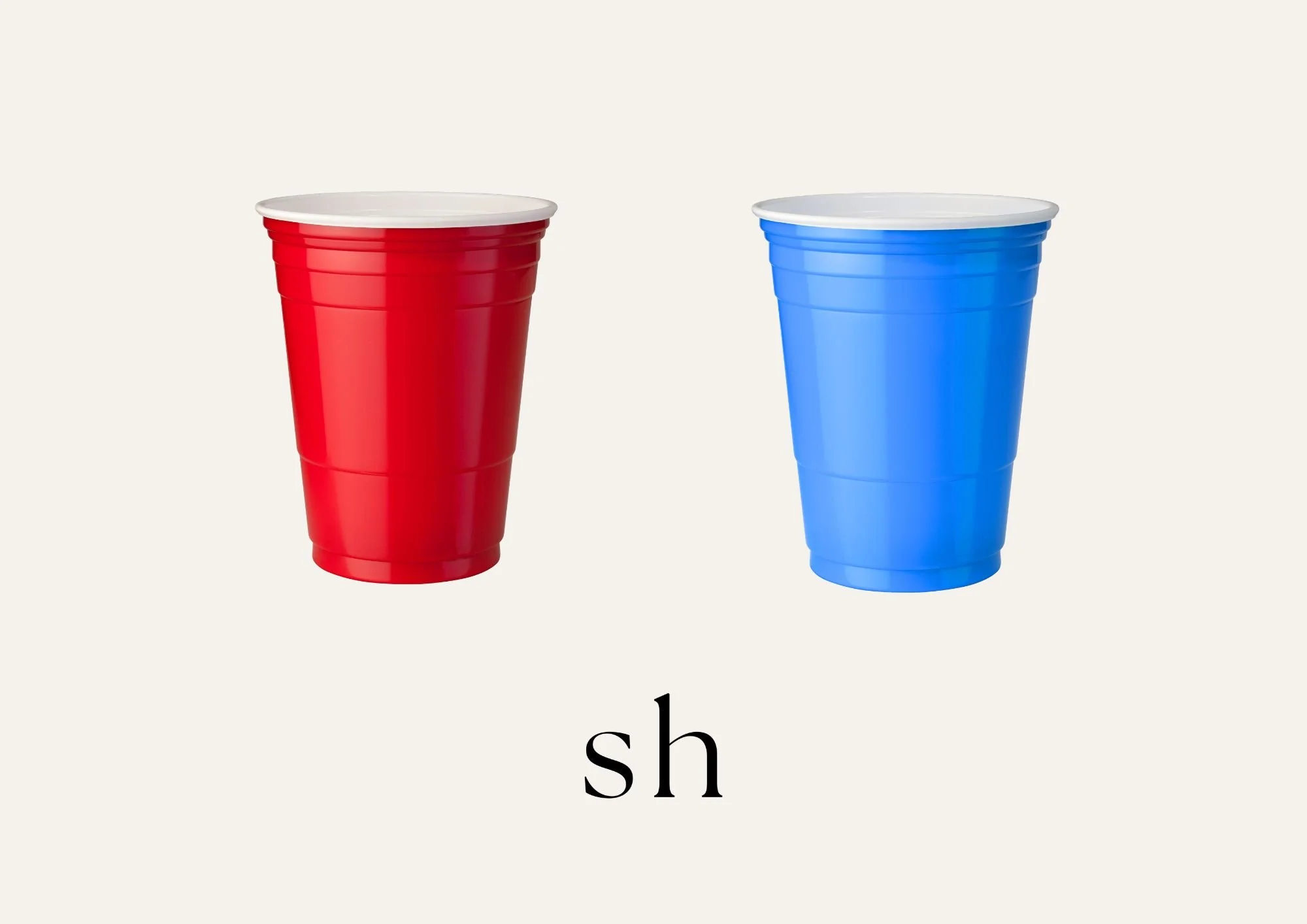
Blue Cup or Red One?
Ask anyone with young children: the need to have a say appears long before the ability to explain it.
This ancient drive for autonomy is deeply written into the instruction manual of being a human; we arrive into the world craving a sense of control over what happens to us.
This doesn’t disappear as we get older.
But we’re now living in a world that has become exceptionally good at making tiny decisions on our behalf.
The average day is filled with hundreds of small moments in which someone or something else decides what deserves immediate focus. Notifications interrupt conversations, calendars fill themselves, algorithms pick what appears next, messages arrive whenever they like.
These micro-invasions don’t just scatter attention, they steadily send the nervous system a message that someone else is driving.
So while none of this looks particularly dramatic in real time, turns out the small stuff isn’t quite as small as it looks.
Every Vote Counts
Every decision we consciously make – saying no, letting a message wait, protecting an uninterrupted hour – is a small vote for agency. Individually these choices look too trivial to matter, but collectively they shape our sense of control in a world that’s increasingly designed to take the reins.
Our brains are constantly keeping score of how much control we have over our lives.
That’s not to say our problems magically disappear by setting boundaries, deleting apps, or building better habits.
But our nervous system recalibrates when it repeatedly experiences the power of small decisions in changing our trajectory.
In other words, the body doesn't just care what's asked of it – it cares who's doing the asking too.
-
Health inequalities among British civil servants: the Whitehall II study. Marmot, M. G., Smith, G. D., Stansfeld, S., et al. (1991). The Lancet, 337(8754), 1387–1393.
Inequalities in death – specific explanations of a general pattern? Marmot, M. G., Shipley, M. J., & Rose, G. (1984). The Lancet, 323(8384), 1003–1006.
Low job control and risk of coronary heart disease in Whitehall II (prospective cohort) study. Bosma, H., Marmot, M. G., Hemingway, H., et al. BMJ, 314(7080), 558–565.
Enjoy this article?
Absolutely no spam. Ever.

About The Author
Shaady Harrison is a British medical doctor, writer and private advisor specialising in the intersection of psychology, calm and performance.